Trump Has Not Forgotten About Greenland
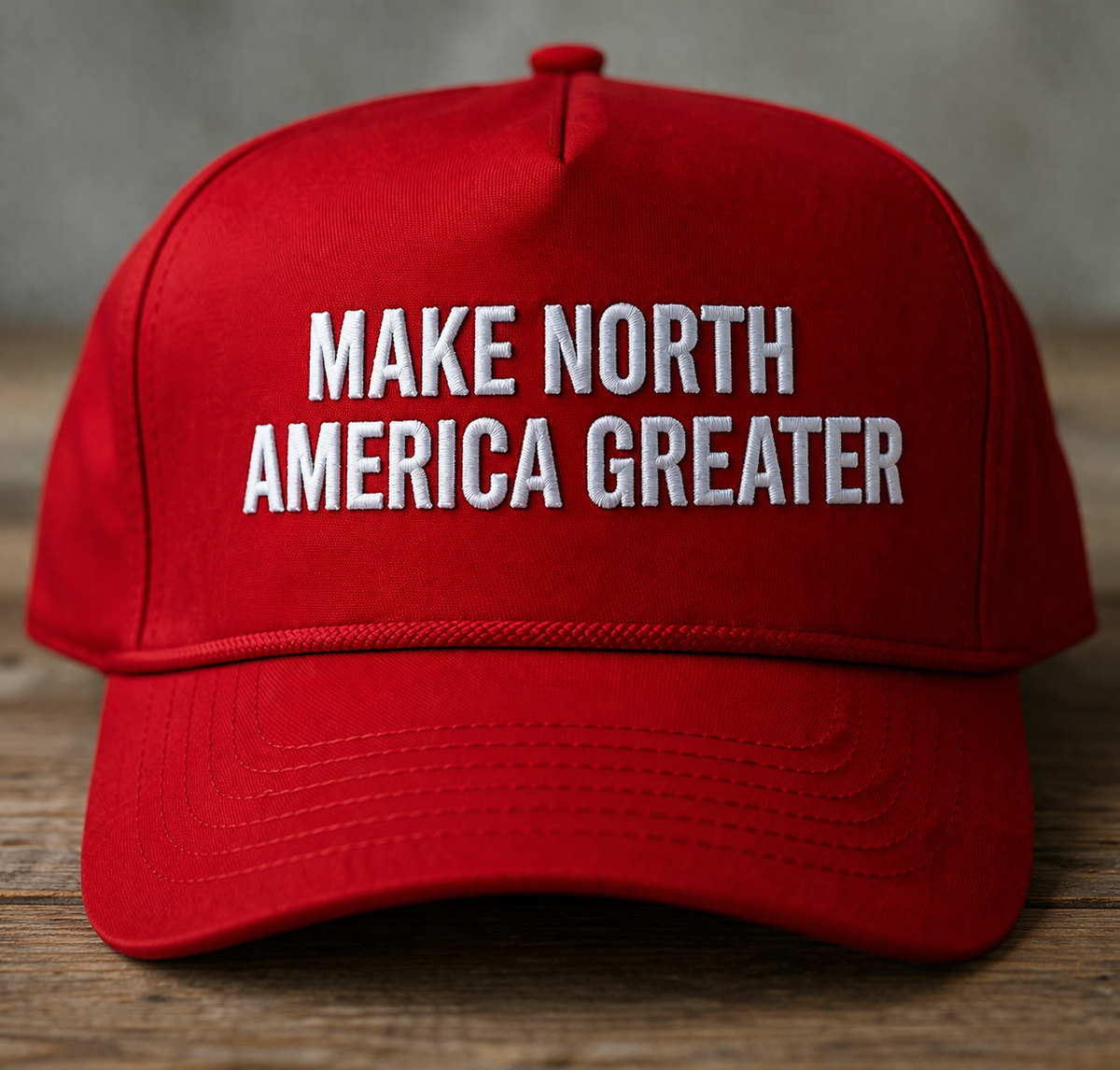
The United States is no longer testing the idea of Greenland. It is placing it inside a system.
That is what “Greater North America” does. When Pete Hegseth describes Greenland as part of an “immediate security perimeter,” he is not repeating the old Monroe Doctrine. He is moving past it. The Monroe Doctrine drew a line against outsiders. This new language redraws the inside and decides what belongs within it.
It sounds administrative. It is political.
The Monroe Doctrine was explicit about power. It warned others to stay away. “Greater North America” avoids that tone. It speaks about geography, access and security. It makes the argument feel technical. But the effect is broader. Greenland is no longer just protected space. It becomes organised space.
That difference matters because it lowers the threshold for involvement. You do not need to argue for control if you can present presence as a requirement.
This is the logic Greenland now faces.
And it arrives at the same moment Greenland is trying to expand its own room for action. Qarsoq Høegh-Dam and Naaja H. Nathanielsen entered Danish government negotiations together with clear demands. More influence over foreign policy. A clearer path toward constitutional change. Not framed as confrontation, but as conditions for cooperation.
They are not reacting to rhetoric. They are reacting to structure.
Because Greenland is already being discussed externally in ways that assume strategic importance beyond Denmark’s internal arrangements. When Washington speaks about Greenland as part of a security perimeter, the question of representation stops being theoretical. It becomes immediate.
Denmark is trying to manage that shift without breaking its own framework.
Mette Frederiksen’s government has taken a pragmatic line. It has shown willingness to involve Greenland more in foreign policy discussions and to open space for constitutional development. At the same time, it has worked to prevent the issue from narrowing into a bilateral matter between Denmark and the United States. By bringing in the EU, NATO, Canada and the United Kingdom, Denmark has widened the frame and anchored Greenland in a broader alliance context.
That has had an effect. It has reduced the risk of escalation and made it harder to isolate Greenland as a negotiable asset. It has also strengthened Denmark’s position in Europe. She has been ranked among the most influential political figures in Europe, just behind Donald Trump. That reflects a specific kind of political handling. Keeping a volatile issue inside alliances rather than letting it drift into unilateral pressure.
It is difficult to see that balance being handled in the same way without that approach.
The domestic political picture is less stable.
Dansk Folkeparti emerged as one of the clear winners of the election, and its position on the Kingdom is not ambiguous. It questions the current balance and has argued that Danish financial support should not continue if Greenland chooses independence. It remains unlikely, but not impossible, that the party becomes part of a governing coalition.
There is a deeper argument behind that position. Parts of the Danish right have suggested that American interest in Greenland follows Greenlandic ambitions. If Greenland did not pursue independence, the argument goes, the United States would not be as engaged.
That claim reverses the sequence.
American interest in Greenland is not new and not contingent on recent political developments in Nuuk. It is tied to geography, military reach and Arctic positioning. What has changed is how that interest is expressed and how openly it is integrated into strategic thinking.
Greenland’s political movement does not create that interest. It changes how exposed it becomes.
This is where the paradox appears.
If Denmark limits Greenland’s influence over foreign policy, it reinforces the sense that Greenland is being positioned by others without having full authority to respond. That strengthens the argument for independence. If Denmark expands Greenland’s role, it loosens its own control in a moment where external pressure is increasing.
The tension does not disappear. It moves.
At the same time, the wider NATO context is becoming more unstable. The United States is not only redefining its language around the Arctic. It is also testing the limits of alliance behaviour elsewhere. The pressure on European states over the conflict with Iran and the Strait of Hormuz shows a shift in tone. Commitments are treated as negotiable. Support is demanded more directly. European leaders have begun to respond more openly, warning that inconsistent American signals risk weakening the alliance itself.
This matters for Greenland because it changes the environment in which its future is negotiated.
If NATO becomes less predictable, the value of Greenland as a strategic location increases, not decreases. At the same time, the reliability of the alliance framework that Denmark relies on becomes less certain. That combination puts pressure on both Copenhagen and Nuuk.
Greenland is not outside this shift. It is placed at its centre.
Formally, it is part of the Kingdom of Denmark. Strategically, it is treated as part of an American security space that extends beyond formal borders. Politically, it is asking for greater authority over how it engages with that space.
These three layers do not align.
The language used to manage them still suggests cooperation and continuity. But the underlying logic has changed. Security arguments are becoming stronger than constitutional ones. Strategic mapping is starting to override political nuance.
That is what “Greater North America” represents. Not a declaration, but a reordering.
The Monroe Doctrine told others to stay out.
This version assumes the inside has already been decided.
And in that assumption, Greenland is no longer being asked where it stands.